 TL;DR: Building a Skill Portfolio Over Chasing Job Titles
The traditional career ladder is breaking down due to flatter organizations, title inflation, and wider use of AI. Instead of chasing promotions, future-proof your career by building a “skill portfolio”: a diversified set of technical, soft, and signature skills, plus leverage. Unlike job titles, which tie your progress to factors beyond your control, skills travel with you and compound over time.
Many of us working professionals were taught that career success means climbing the corporate ladder: earning a better title, managing more people, and moving up step by step. But today’s workplace is changing fast. Reorgs happen more often, organizations and their teams are flatter, and AI is reshaping job requirements. That’s why more professionals are shifting from chasing titles to building a skill portfolio, namely, a flexible, future-proof approach to career growth.
A job title can change overnight. Your skills, reputation, and results are portable and travel with you.
Why the Traditional Career Ladder Is Breaking Down
Job titles still matter, but they’re becoming a less reliable measure of value. Here’s why the “career ladder” model feels harder than it used to:
- Title inflation across companies: The same title can mean very different levels of responsibility depending on the organization.
- Flatter organizational structures: Promotions can be limited simply because there’s no open role above you.
- Project-based work is replacing role-based work: Many professionals lead major initiatives without a formal title change.
- AI and automation are changing what employers value: Routine tasks are easier to automate; judgment, critical thinking/analysis, leadership, and influence are more important than ever.
When your career plan depends on the next promotion, you’re exposed to factors you can’t control. A skill portfolio gives you more agency over your career development.
What a Skill Portfolio Means for Career Growth
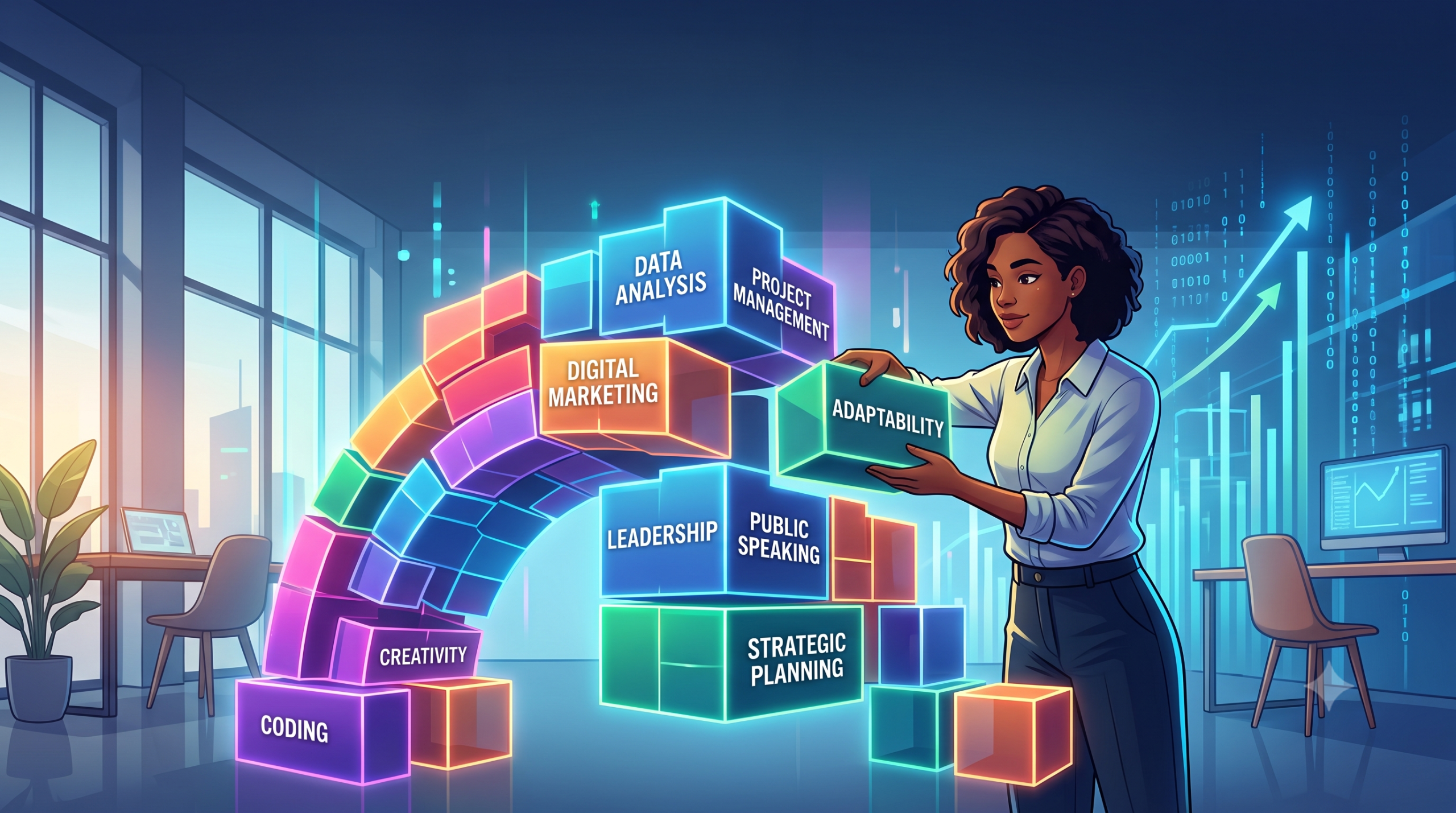 A skill portfolio is a deliberately built set of capabilities that increases your options across roles, companies, and even industries. Think of it like a “career investment portfolio”: diversified, intentional, and designed to perform, even in changing conditions.
Most strong skill portfolios include four categories:
- Domain skills (technical or industry expertise): this is the core of what you do
- Power skills (also known as “soft skills”): how you work with people and complexity
- Leverage skills: what multiplies the impact of your work (e.g., data literacy, AI fluency, systems thinking, understanding anti-racism, equity, diversity, and inclusion)
- Signature strengths: what you’re uniquely known for and consistently deliver even under pressure
A job title suggests you might have these skills. A portfolio demonstrates that you do.
Why Building a Skill Portfolio Beats Chasing a Job Title
Promotions are typically tied to timing, budgets, organizational structure and politics. Unlike promotions, skill-building can compound every week.
A portfolio approach also changes the questions you ask, which improves your decision-making:
- What skills will make me valuable in multiple roles, not just my next one?
- What do I want to be known for in my organization or industry?
- Which recurring feedback points to a skill gap I should address?
- What projects would force me to practice the skills I want to own?
This is an important part of the foundation for long-term career resilience: you continue developing even when the org chart stays the same.
A Tip for Building a Skill Portfolio (Practical Steps for Working Professionals)
Use Projects as Part of Your Career Development Strategy
 Projects are the fastest way to build a skill portfolio. Choose assignments that stretch you in targeted ways:
- leading a cross-functional initiative,
- presenting recommendations to more senior leaders/executives,
- redesigning a process,
- mentoring someone more junior,
- facilitating a difficult conversation.
If those opportunities aren’t available, try to create equivalents through professional associations, volunteer leadership roles, or even internal knowledge-sharing.
Communicate Your Skill Portfolio Clearly (Personal Branding That Feels Natural)
Your title says where you sit. Your portfolio explains what problems you solve.
Create a clear positioning statement, such as:
“I help teams simplify complex work, align stakeholders, and deliver outcomes, especially when priorities shift.”
This statement makes it easier for leaders, recruiters, and clients to quickly understand your value.
For more on this topic, read or listen to some previous blog articles, The Portfolio Career (Part 1 of 2) and The Portfolio Career (Part 2 of 2).
Why Reputation and Skills Travel Further Than Titles
 For many professionals, these are complicated times for maintaining solid career progression. In my experience, the new career ladder is less about climbing and more about “stacking”: stacking skills, credibility, outcomes, relationships, and visibility. This is intimately connected to your reputation and personal brand. Titles may still come, but they become the byproduct, not the goal.
If you want help defining your skill portfolio, identifying high-leverage development opportunities, and translating your experience into a compelling career narrative, that’s exactly what I do through coaching. This is also a high-impact topic for leadership teams that want stronger career development conversations than “wait for a promotion.”
Follow my work on LinkedIn, Facebook, Instagram, YouTube and TikTok for practical tools on leadership and career growth, and reach out if you want to build a portfolio that travels with you, no matter what the org chart does.
Want to build a skill portfolio that makes you promotion-ready and future-proof? If you’d like help identifying your highest-leverage skills, choosing the right stretch opportunities, and crafting a clear career narrative, book a free initial coaching consult here.
P.S. If you haven’t yet done so, stay in the loop by subscribing to my bi-monthly newsletter. I promise not to spam you, and your email address will always remain private.
If you enjoyed this topic or are interested in ongoing professional and leadership development, you’ll also enjoy reading or listening to How to Be Resilient in Your Career: Facing up to Barriers at Work, my book, published in February 2023 by Routledge. It’s available in print, as an eBook, and on Audible.
More than career coaching, it’s career psychology®.
I/O Advisory Services Inc. – Building Resilient Careers and Organizations TM.